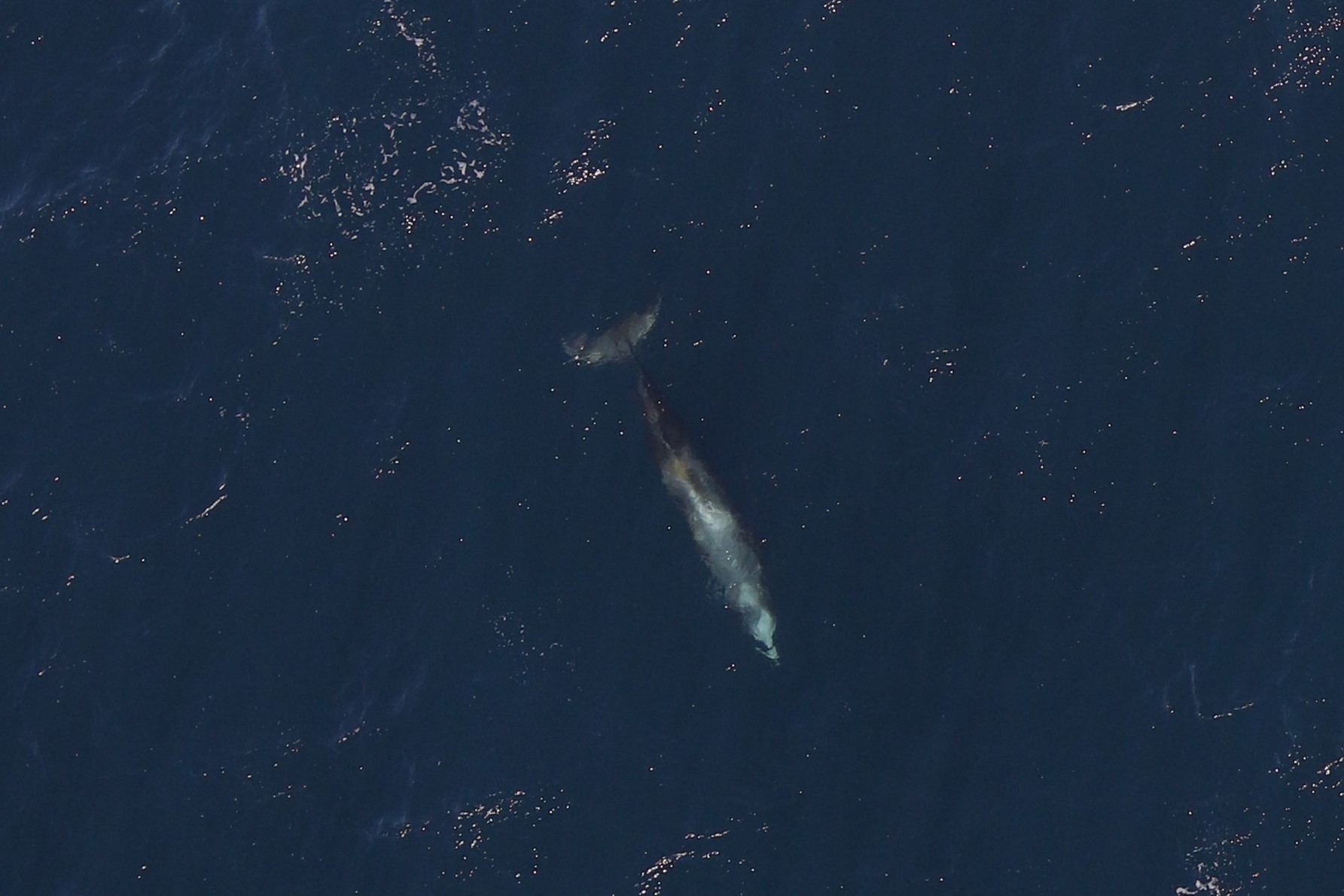
A Cuvier's beaked whale below the surface, photographed from the air during a USGS Western Ecological Research Center survey. The species holds both records in the list above: 2,992 m deep and 137.5 minutes under. Image: USGS.
Every one of these animals breathes air and hunts in the dark, kilometres below the surface. The depths below are the deepest dives confirmed by an instrumented tag or a controlled observation, not estimates from stomach contents or strandings, and they are records for individuals rather than everyday behaviour.
-
Cuvier's beaked whale — 2,992 m. The deepest dive ever recorded by a mammal. In 2013 researchers tagged eight whales off southern California with satellite-linked recorders and collected more than 3,700 hours of data; one dive reached 2,992 m, and another lasted 137.5 minutes, both records at the time of publication in 2014. The whales spend most of their lives beyond the reach of light, echolocating for squid in water cold enough to slow their hearts.
-
Southern elephant seal — 2,388 m. The previous record holder for both depth and duration, and still the deepest-diving seal. Males can weigh three tonnes and dive for well over an hour; the record dive was recorded in the Southern Ocean, where the seals feed on squid and fish along the Antarctic Circumpolar Current. Researchers have measured no lasting ill effects from these dives.
-
Blainville's beaked whale — 1,888 m. A smaller, warmer-water beaked whale, tagged in Hawaii with acoustic recorders that logged both depth and the clicks it used to hunt. The 1,888 m dive was the deepest confirmed for the species when it was published in 2006, and the tag data showed the whale switching from shallow travel dives to deep, silent hunting dives at dusk.
-
Northern bottlenose whale — more than 1,500 m. A cold-water species of the North Atlantic, tagged in the late 1990s, that dives for more than an hour at a time in pursuit of squid. Its long, deep dives and its habit of approaching ships made it the target of a nineteenth-century hunt that killed thousands; the same curiosity now makes it easy to study.
-
Weddell seal — about 700 m. The shallowest entry on the list, and the one that dives under the most ice. Weddell seals live further south than any other mammal, overwintering under the Antarctic fast ice and keeping breathing holes open with their teeth. They routinely work between 300 and 400 m; the deepest recorded dives reach about 700 m, and the longest last more than 80 minutes.
At 2,000 m the lungs have collapsed under pressure, the water is close to freezing and there is no light at all; the animals hunt by echolocation and return to the same breathing hole or the same patch of surface water. The records matter less as single dives than as routine behaviour: these species make deep dives repeatedly, day after day.