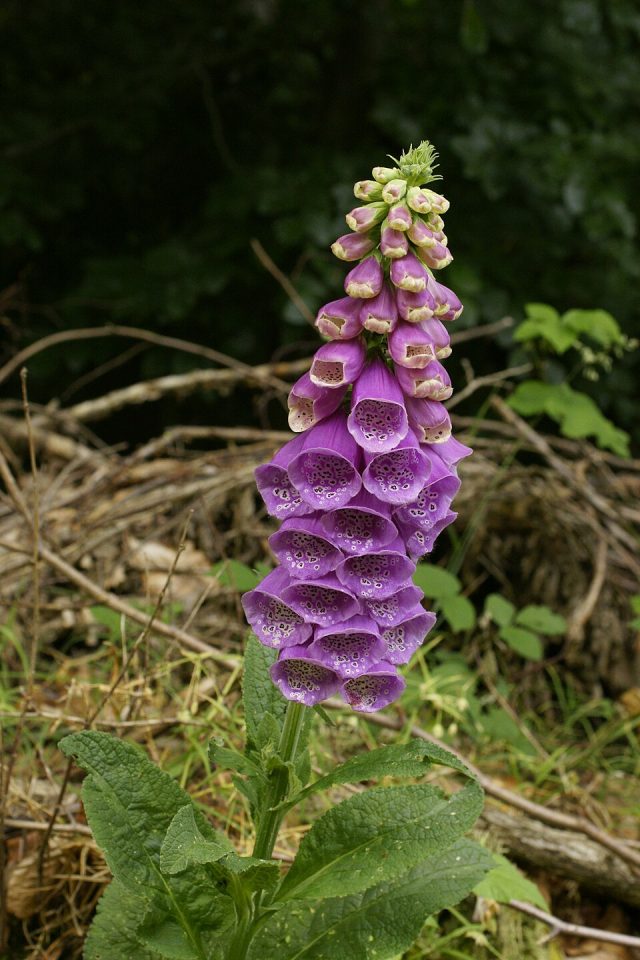
Foxglove (Digitalis purpurea), the source of digitoxin and digoxin. Every part of the plant is poisonous, and the useful dose is close to the dangerous one. Image: Robert Flogaus-Faust, CC BY 4.0.
Most of the drugs in a modern pharmacy started as a plant somebody noticed. The five below are not folk remedies that were later vindicated — each is a plant whose active compound was isolated, characterised and turned into a standardised medicine, and each is still the commercial source of that compound or was until synthesis took over. The doses are given because they are the point: a plant is a variable mixture, and a drug is a fixed one.
-
Willow — salicin, and then aspirin. Bark of Salix species was used for pain and fever in ancient Egypt, Greece and China; the active compound, salicin, was isolated in 1828, and salicylic acid was made from it. The acid is harsh on the stomach, so in 1897 Felix Hoffmann at Bayer acetylated it, and acetylsalicylic acid was sold as aspirin from 1899. Aspirin is still one of the most widely taken drugs in the world, and the willow is still the reason the molecule has a name that begins with "a".
-
Foxglove — digitalis. Digitalis purpurea is a common wildflower of European hedges and woods, and its leaves contain cardiac glycosides — digitoxin and digoxin — that slow and strengthen the heartbeat. William Withering published his Account of the Foxglove in 1785 after tracing a folk remedy for dropsy to the plant, and digitalis remained the standard treatment for heart failure for nearly two centuries. The therapeutic window is narrow: the difference between a helpful and a dangerous dose is small, which is why the drug is now made as a purified glycoside and why foxglove is a plant to admire and not to chew.
-
Cinchona — quinine. The bark of Cinchona trees from the Andes was the first effective treatment for malaria, brought to Europe in the 17th century and used for centuries before quinine was isolated from it in 1820. It is still used for severe malaria, and it is the bittering agent in tonic water — the reason a gin and tonic tastes the way it does. The tree was smuggled out of South America in the 19th century and planted across Asia, which is why quinine production moved to Java and India.
-
Opium poppy — morphine. Papaver somniferum has been cultivated for opium for thousands of years. In 1805 the German pharmacist Friedrich Sertürner reported isolating the main alkaloid from opium, and by 1817 he had named it morphine, after Morpheus, the god of dreams; it was the first alkaloid ever isolated, and the beginning of alkaloid chemistry. Morphine and codeine are still extracted from the poppy, which remains the only commercial source of both.
-
Madagascar periwinkle — vincristine. Catharanthus roseus is a roadside weed and garden flower across the tropics, and in the 1950s it was being studied for a supposed effect on diabetes when researchers noticed that its extracts suppressed bone marrow. The alkaloids vinblastine and vincristine came out of that work, and vincristine became a standard drug in childhood leukaemia and lymphoma. The plant is still the only commercial source of both compounds, which is why a great deal of chemistry has gone into making them in the laboratory — so far, not at a price a factory can beat a field.
The pattern is consistent: a plant gives a molecule, and medicine turns the molecule into a dose. Willow bark, foxglove leaves and opium sap vary with the season, the soil and the plant, and the difference between a remedy and a poisoning can be a factor of two. That is the reason these five are drugs rather than herbs, and the reason the plants themselves are not a safe substitute for the medicines made from them.