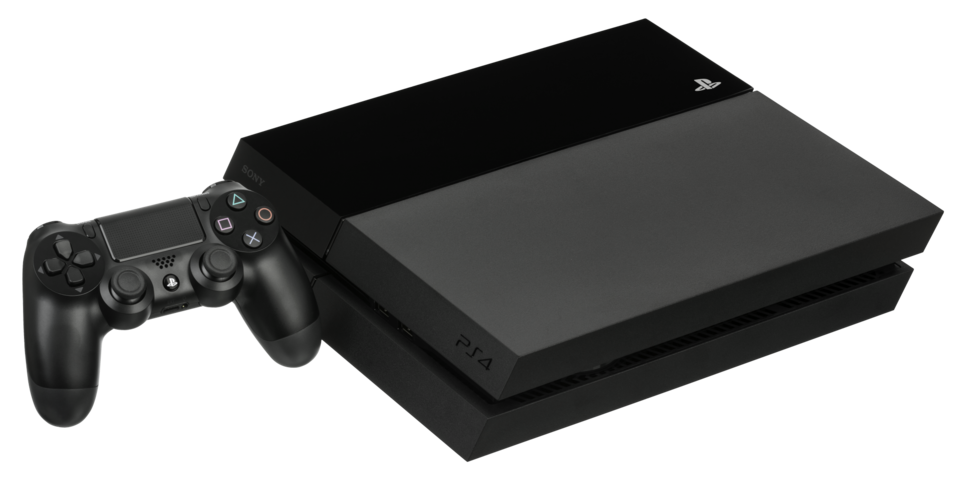
A games console. Set-top boxes and consoles stay awake to fetch updates and hold connections open; the draw continues while the television is off. Image: Evan-Amos, public domain, via Wikimedia Commons.
A device that is switched off is rarely off. Most household electronics keep a power supply live to watch for a remote control, keep a clock running, hold a network connection open or charge a battery, and the power that goes into that is called standby or, more colourfully, vampire load. The reference measurement is still the Lawrence Berkeley National Laboratory whole-house study, which metered 190 appliances in ten homes individually and at the meter: standby accounted for between 5 and 26 per cent of each home's annual electricity, and the largest losses were televisions, set-top boxes and printers. The five below are the devices with the biggest measured draw while idle.
-
Set-top boxes — 10.2 W average, up to 23 W. The worst offender measured, and the reason is structural: a cable or satellite box has to stay awake to download the programme guide, apply updates and record on a schedule. A box with a hard drive never fully sleeps. Modern boxes are far better than the 2000-era models in the study, but the function that keeps them awake has not changed.
-
Televisions — 6.4 W average, up to 12 W. The largest single standby load in most homes, simply because there are more televisions than anything else on this list. The draw covers the infrared receiver and, on smart sets, a network connection and a background update cycle. A set that wakes to a voice command never really sleeps at all.
-
VCRs — 5.3 W average, up to 11.3 W. Included because the measurement is the clearest illustration of the pattern: a video recorder kept its clock, its tuner and its timer live so it could start recording at 3 a.m. The hardware is gone from most homes; the same design decision survives in the digital video recorder that replaced it, and in any device with a scheduled job.
-
Music systems and radios — 5.2 W average, up to 10 W. A stereo needs a live remote receiver and a network connection on the models that stream. Standby figures for audio equipment are among the least improved of any category, because the power supply is sized for the amplifier and idles inefficiently.
-
Fax machines and printers — 5.0 W for fax, and printers named among the largest losses. A fax machine stays awake to answer the line; a printer keeps a heater warm so the first page is quick. The whole-house study did not give printers a single average figure, but listed them with televisions and set-top boxes as the three devices whose standby load dominated the total.
These numbers date from a study published in 2000, and the picture has changed unevenly since. Standby limits in the EU and Australia, and the one-watt executive order in the United States, cut the draw of televisions and set-top boxes substantially, and USB-C power delivery has removed a class of always-on wall adapters. What did not change is the arithmetic: a device drawing 10 W all year uses about 88 kWh, which is more than a modern refrigerator's annual consumption for a device doing nothing at all. A plug-in power meter is the only way to know which device in a particular house is responsible, and the answer is usually not the one the owner expects.