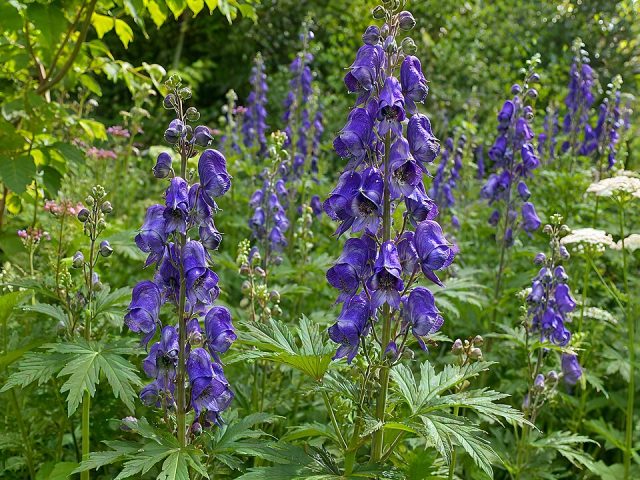
Monkshood (Aconitum napellus). Every part of the plant carries aconitine, and the hooded flowers give it its name. Image: Steffen Bauer, CC BY 4.0.
"Most poisonous" is a slippery ranking. A dose of purified toxin injected into a mouse is not the same as a person chewing a seed, and toxicity varies with the plant part, the season and how well it was chewed. The list below orders plants by the lethal dose of their principal toxin where that has been estimated, and describes the mechanism where it has not. None of it is a reason to handle these plants carelessly; most of it is a reason not to eat wild plants you cannot identify.
-
Rosary pea — abrin, an estimated lethal dose of 0.1 to 1 microgram per kilogram. Abrus precatorius is a tropical climber with scarlet seeds and a black spot, sold for decades as bead jewellery. Each seed contains about 0.075 per cent abrin by mass, a protein that shuts down protein synthesis inside cells, and the US National Response Team puts the human lethal dose at 0.1 to 1 µg/kg — so a single chewed seed can kill. Swallowed whole, the hard coat usually passes through; the poison is released when the seed is crushed or chewed.
-
Castor bean — ricin, an estimated lethal oral dose of 1 to 20 milligrams per kilogram. Ricinus communis grows as a weed and an ornamental across the tropics and subtropics, and its beans are 0.1 to 5 per cent ricin by mass. Eight chewed beans is the usual estimated lethal dose for an adult, and reported deaths have followed as few as two; swallowing intact beans is much less dangerous. Castor oil is safe because the ricin stays in the pressed meal, which is why that meal has to be detoxified before it can be used as feed.
-
Monkshood — aconitine, a minimum lethal oral dose of 1 to 2 milligrams. Aconitum napellus is a garden perennial with hooded blue flowers, and every part of it contains aconitine, a alkaloid that opens sodium channels and throws the heart into arrhythmia. Symptoms start within minutes to two hours of eating it; there is no specific antidote, and deaths have followed both accidental ingestion and herbal preparations made from the root. It is also absorbed through broken skin, which is why the usual advice is gloves.
-
Oleander — cardiac glycosides in every part. Nerium oleander is planted along roads and in gardens across the warm world because it is tough and flowers for months. The same compounds that make it unpalatable — oleandrin and related glycosides — disrupt the heart's electrical rhythm, and they are in the leaves, the flowers, the sap and the smoke if the prunings are burned. Human deaths are uncommon but documented, and livestock poisoning is a real risk where hedges are within reach.
-
Poison hemlock — coniine, an ascending paralysis. Conium maculatum is the plant that killed Socrates, and its alkaloids still work the same way: they block the acetylcholine receptor at the junction between nerve and muscle, so the muscles that move the eyes, then the legs, then the chest stop receiving orders. It grows in ditches and waste ground, smells faintly of mouse urine when crushed, and its ferny leaves and white umbels are easily mistaken for wild carrot, parsley or parsnip — which is how most modern poisonings happen.
The two seeds at the top of the list are the most toxic things here by a wide margin, but they are also the least likely to be eaten by accident: nobody mistakes a scarlet-and-black bead for food. The real risk sits in the middle of the list, with a garden plant and a roadside shrub that look ordinary, and at the bottom, with a weed that looks like a herb. If a plant cannot be identified with certainty, the useful rule is not to put it in the mouth at all.